

This page traces every crest Scuderia Ferrari has worn, from a fighter pilot’s horse in 1923 to the shield on the car, with each era’s colors as one-click hex values.
The prancing horse belonged to the air ace Francesco Baracca, and his mother told Enzo Ferrari to put it on his cars for luck.
The yellow behind it is Ferrari’s own addition, the color of Modena, the city he was born in.
Today it runs on yellow, italian green and italian red: #BDA094 #404241 #FD303C. For RGB, CMYK and Pantone, see the current Scuderia Ferrari color codes.
Scuderia Ferrari logo history timeline
Scuderia Ferrari logo 1917-1923
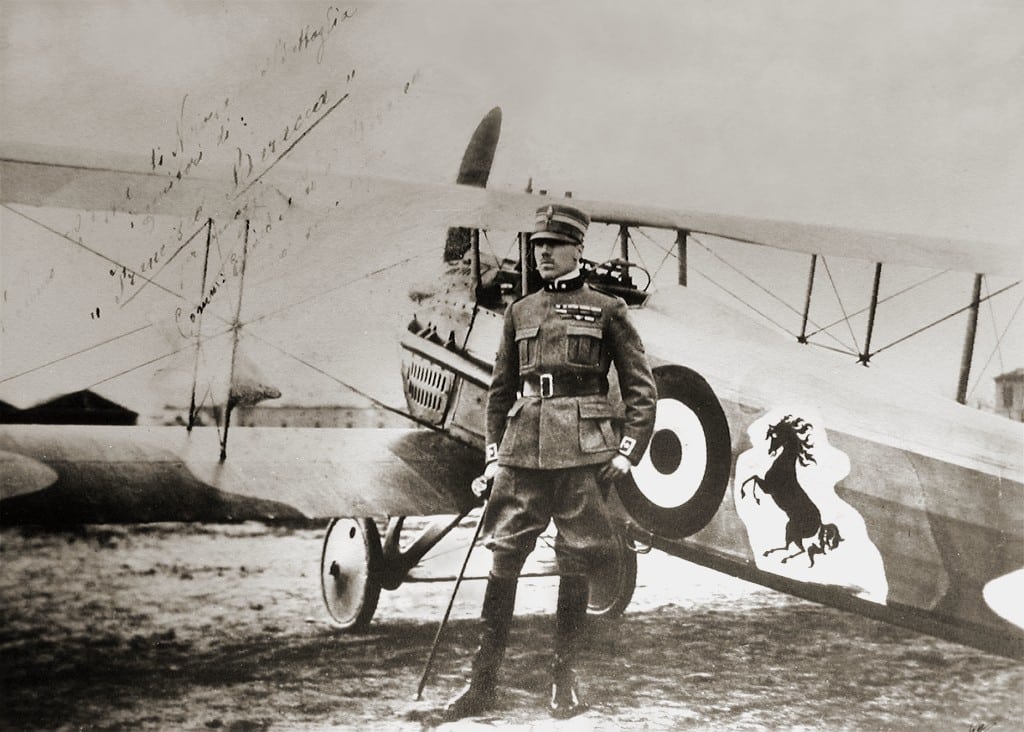
Pre-Ferrari origin: WWI ace Francesco Baracca painted a rearing horse on his fighter's fuselage; a documented version at the Museo Francesco Baracca shows it on a plain background with a downturned tail.
Scuderia Ferrari logo 1923-1929
No logo is shown here because Ferrari had none yet. The prancing horse was still Francesco Baracca's personal emblem, and Enzo Ferrari first put it on a car in 1932.
After meeting Baracca's parents in 1923, Enzo Ferrari was reportedly given permission by Countess Paolina Biancoli to use her son's horse emblem for luck; this is a transitional attribution period before formal racing adoption, less rigorously documented than the 1932 race debut.
Why it changed: Personal tribute/gift from the Baracca family, not yet an official racing emblem.
Scuderia Ferrari logo 1929-1932
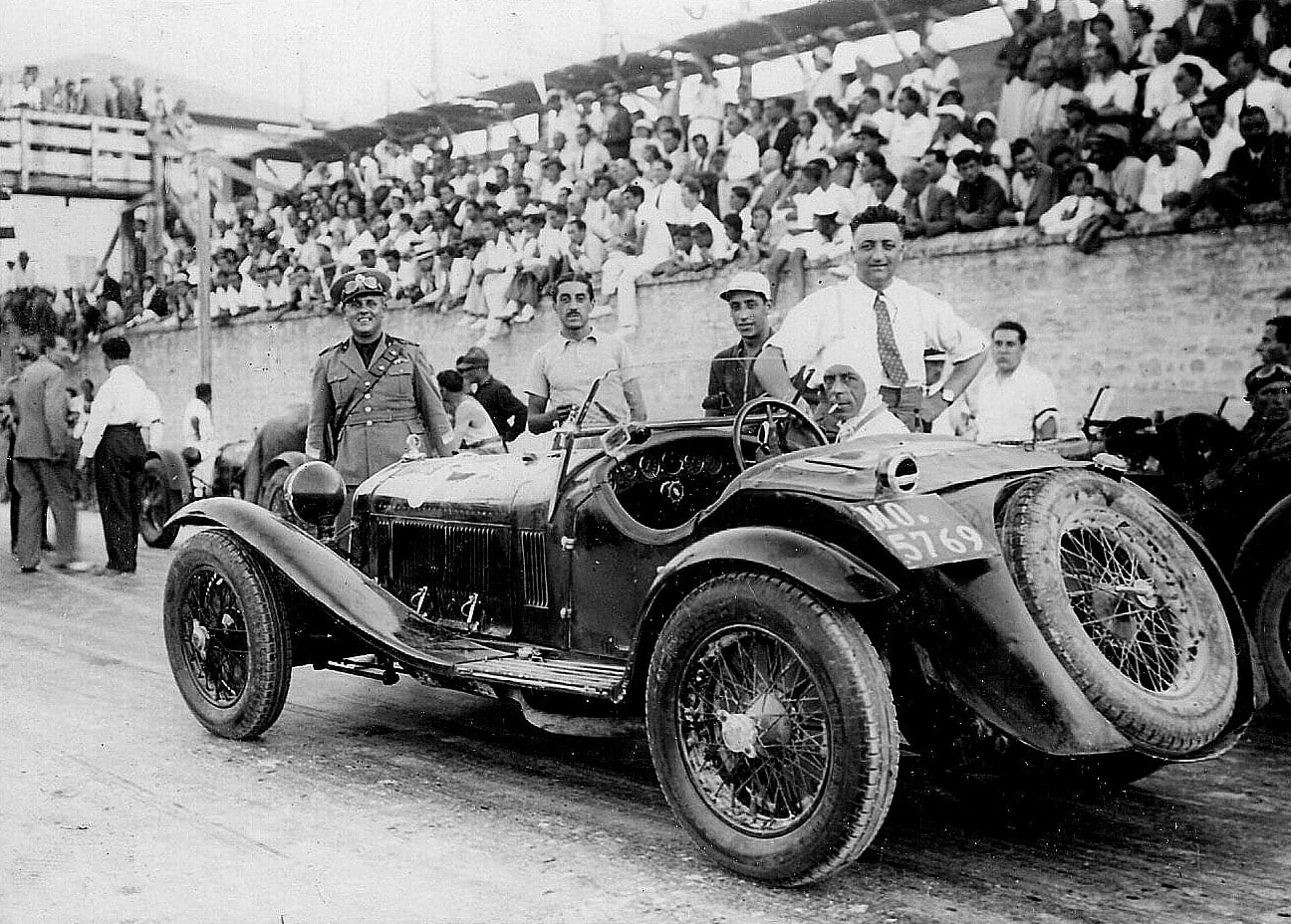
Scuderia Ferrari founded 16 November 1929 in Modena to run Alfa Romeo racing entries; the horse-on-yellow-shield emblem was adopted in principle but had not yet appeared on a car.
Scuderia Ferrari logo 1932-1940
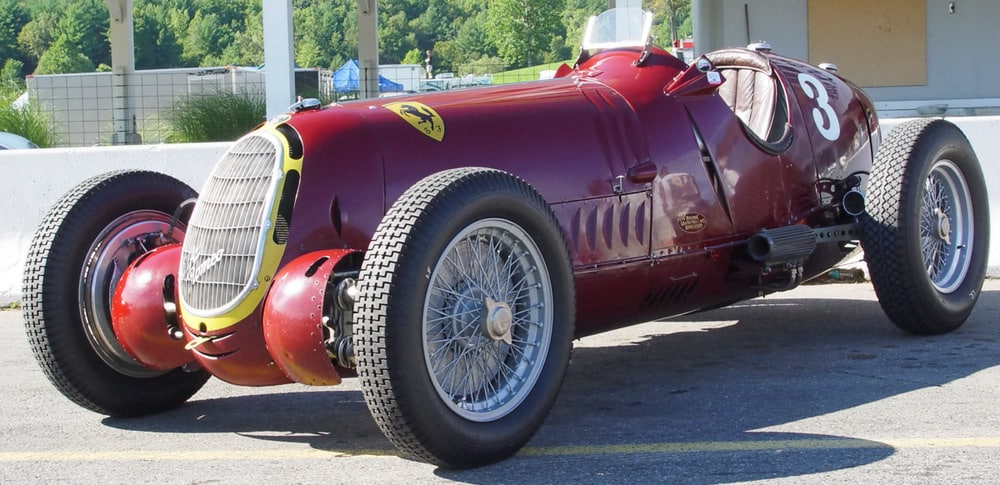
The black Cavallino Rampante on a yellow shield first appeared on race cars at the 24 Hours of Spa on 9 July 1932, on Alfa Romeo 8C 2300s entered by Scuderia Ferrari; the shield carries the Italian tricolore stripe at top and the initials "S" and "F".
Why it changed: First competitive debut of the emblem as adopted by Enzo Ferrari's team.
Scuderia Ferrari logo 1940-1945
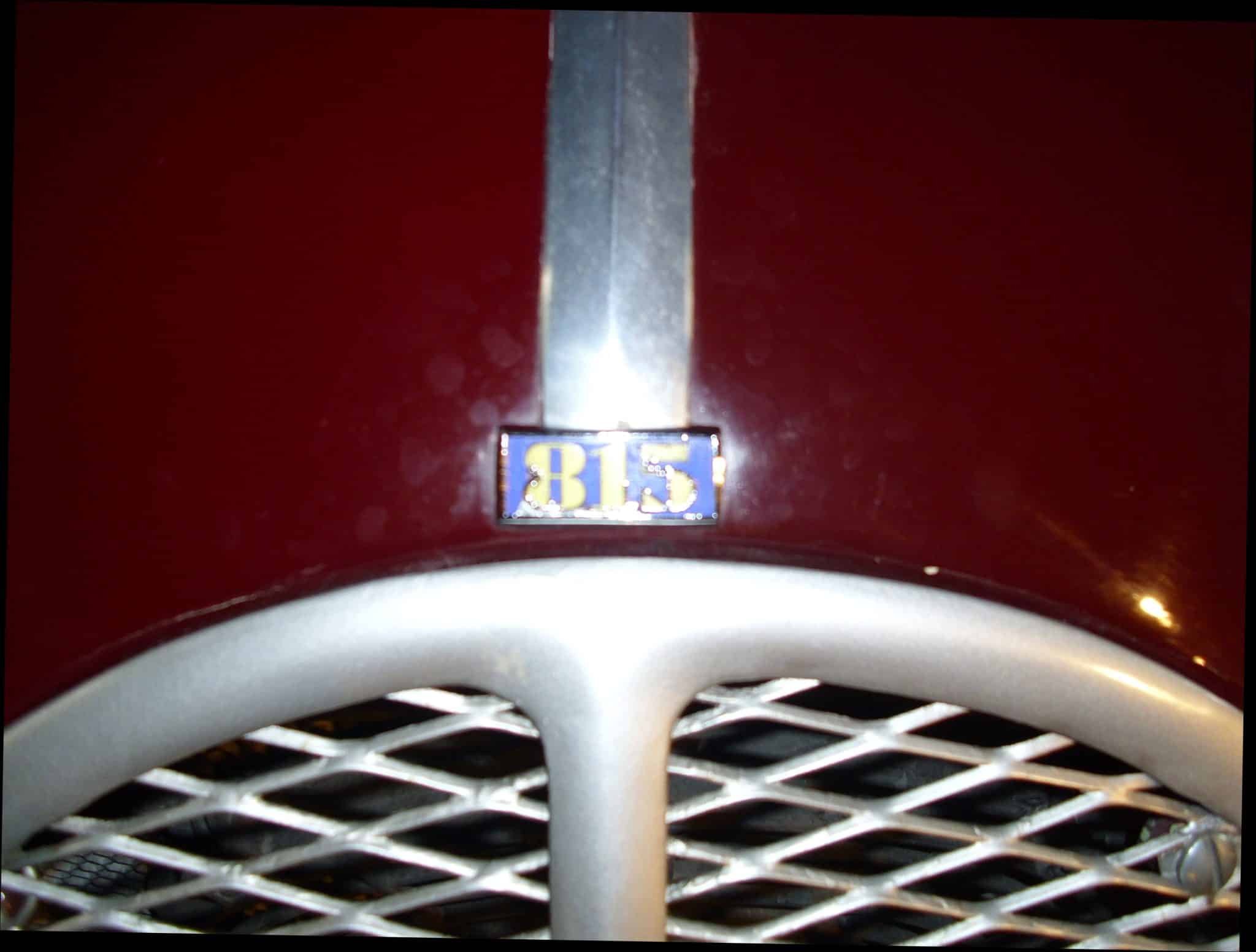
After splitting from Alfa Romeo in 1939, Enzo Ferrari founded Auto Avio Costruzioni; a non-compete clause barred use of the Ferrari name and its established emblem on cars for four years, so the 1940 Auto Avio Costruzioni 815 did not carry the standard Ferrari name or shield.
Why it changed: Non-compete clause with Alfa Romeo barred use of the Ferrari name/identity for four years.
Scuderia Ferrari logo 1945-1947
No image of this step survives on its own. The redesigned horse, with the tail turned upward, first reached the public on the 1947 badge shown below.
Enzo Ferrari commissioned a redesign (attributed to engraver Eligio Gerosa) changing the horse's tail from downturned to upturned and standardizing the horse always facing left, in preparation for cars sold under the Ferrari name.
Why it changed: Preparation for Ferrari's transition from a racing team into an independent manufacturer under its own name.
Scuderia Ferrari logo 1947-present (road-car badge)
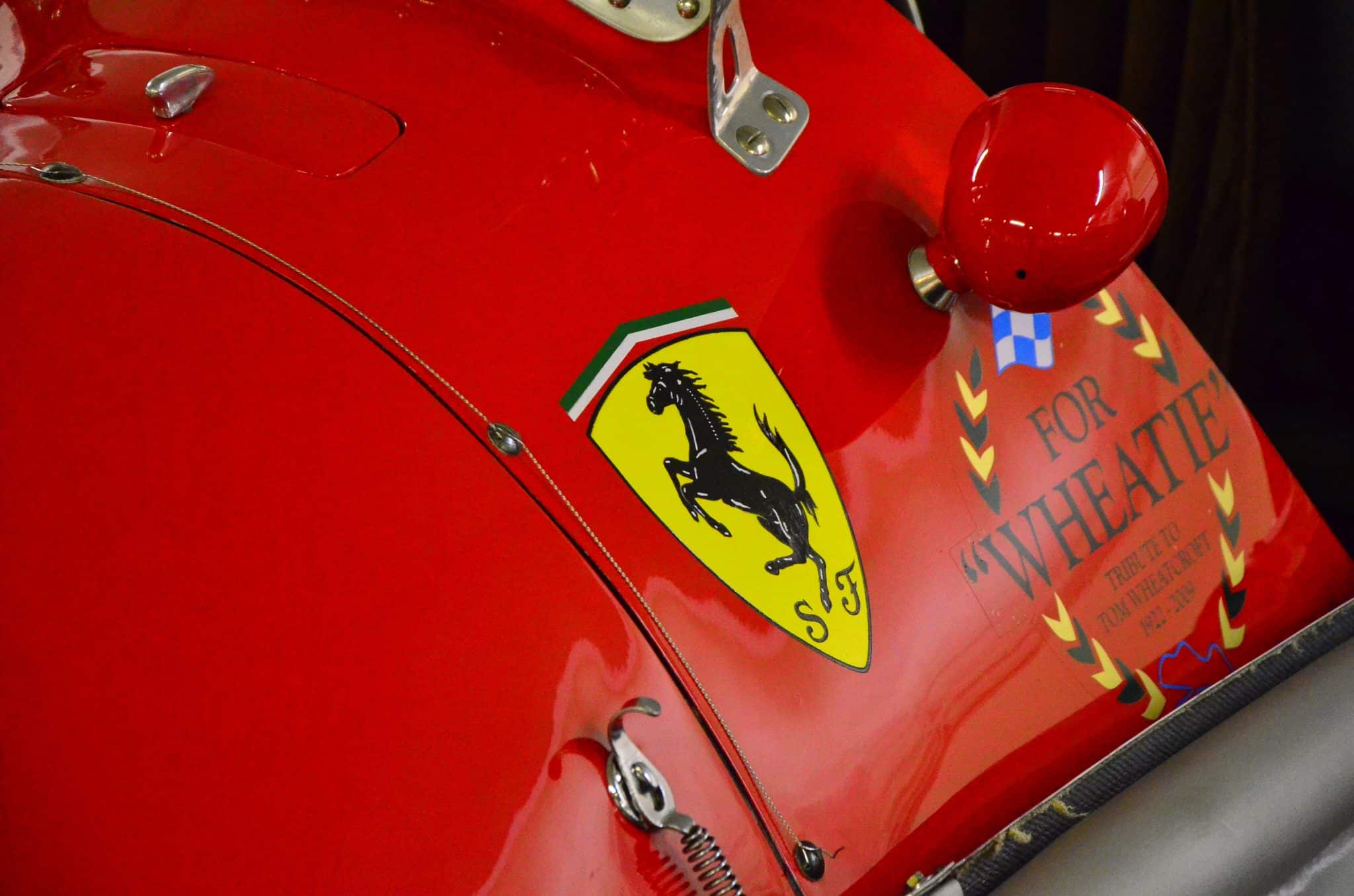
With the Ferrari 125 S (1947), the first car sold under the Ferrari name alone, a separate rectangular yellow badge was introduced: black prancing horse over the Italian tricolore with the word "Ferrari" replacing the "SF" initials. This wordmark badge is distinct from the shield-shaped racing emblem.
Why it changed: A distinct mark was needed for the new independent road-car brand.
Scuderia Ferrari logo 1947-2010 (racing shield lineage)
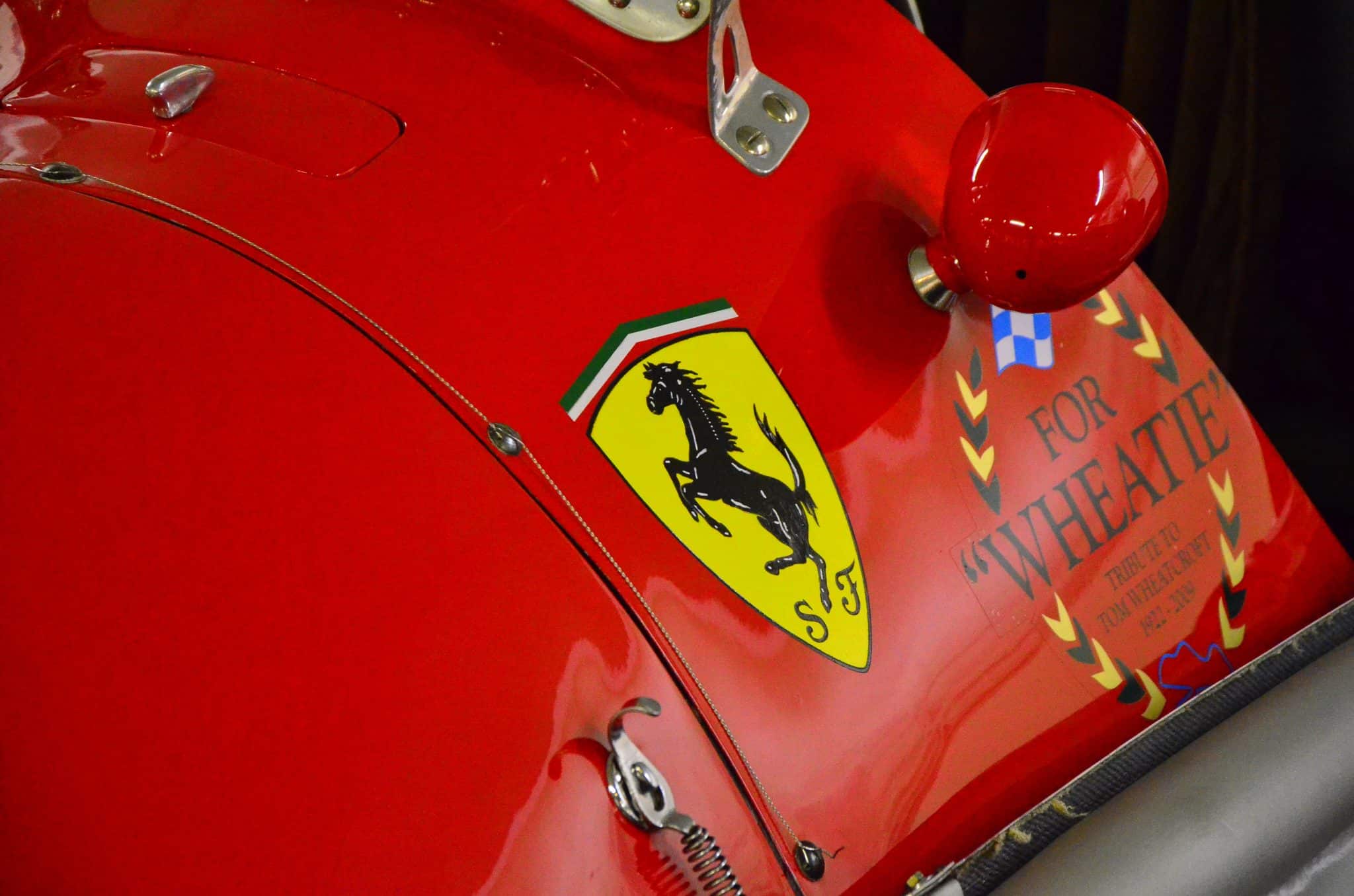
The shield-shaped racing emblem (tricolore stripe, black horse, "S"/"F" initials) continued in parallel on F1 cars and team wear, evolving gradually: refined proportions in the 1950s-60s, a thicker silver frame added around 1981, and the frame thinned/glossier by 2005.
Why it changed: Incremental modernization over decades.
Scuderia Ferrari logo 2010-present
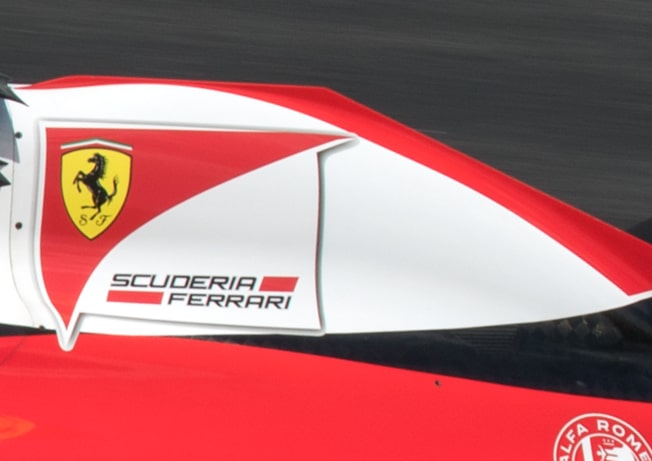
The black separator lines between the green/white/red tricolore stripes were removed in 2010 for a smoother, more modern look on the racing shield.
Why it changed: Design modernization/refinement.
Scuderia Ferrari logo colors by era
| Era | Colors |
|---|---|
| 1917-1923 | Plain/white #FFFFFF |
| 1923-1929 | — |
| 1929-1932 | Canary yellow #FFF200 |
| 1932-1940 | Yellow #FFF200green/white/red tricolore #FFFFFF |
| 1940-1945 | — |
| 1945-1947 | canary yellow #FFF200 |
| 1947-present (road-car badge) | Yellow #FFF200 |
| 1947-2010 (racing shield lineage) | Yellow #D3CD1FItalian green #5D4E3F*Italian red #C94431* |
| 2010-present | Yellow #BDA094Italian green #404241*Italian red #FD303C* |
Things worth knowing
- The origin story linking the prancing horse to WWI ace Francesco Baracca (via a gift from his mother, Countess Paolina Biancoli) is Ferrari's own official telling, but is disputed in secondary literature, with competing undocumented narratives about the emblem's exact source.
- After splitting from Alfa Romeo in 1939, a non-compete clause barred Enzo Ferrari from using the Ferrari name (and its established racing identity) for four years, so the 1940 Auto Avio Costruzioni 815 could not be branded as a 'Ferrari'.
- The racing shield (with tricolore stripe and 'S'/'F' initials, debuted 1932) and the rectangular road-car badge (word 'Ferrari' replacing 'SF', introduced 1947) are two distinct marks with separate histories and uses.
- No official hex code for either the historical or current shades of Ferrari's racing red (Rosso Corsa) is documented in the sources consulted; the shade is known to have drifted across decades without a single formalized value.
Values marked * were measured from the logo artwork of that period. Brand color standards did not exist for most of these eras, so no official hex value was ever published for them. Treat them as an accurate reading of the artwork rather than as an official brand value. Unmarked values are the club’s own published colors.
Sources
- https://it.wikipedia.org/wiki/Cavallino_Rampante
- https://en.wikipedia.org/wiki/Scuderia_Ferrari
- https://it.wikipedia.org/wiki/Scuderia_Ferrari
- https://en.wikipedia.org/wiki/Prancing_Horse
- https://1000logos.net/ferrari-logo/
- https://commons.wikimedia.org/wiki/Category:Scuderia_Ferrari_logos
- https://commons.wikimedia.org/wiki/File:New_logo_of_Scuderia_Ferrari,_Marlboro_subliminal_advertising_(cropped).jpg
- https://commons.wikimedia.org/wiki/File:Ferrari_wordmark.svg


