

This page traces every crest Liverpool has worn, from the liver bird of 1892 to the crest on the shirt today, with each era’s colors as one-click hex values.
Liverpool was founded in 1892 out of an argument over rent at Anfield, with the liver bird from the city arms as its symbol.
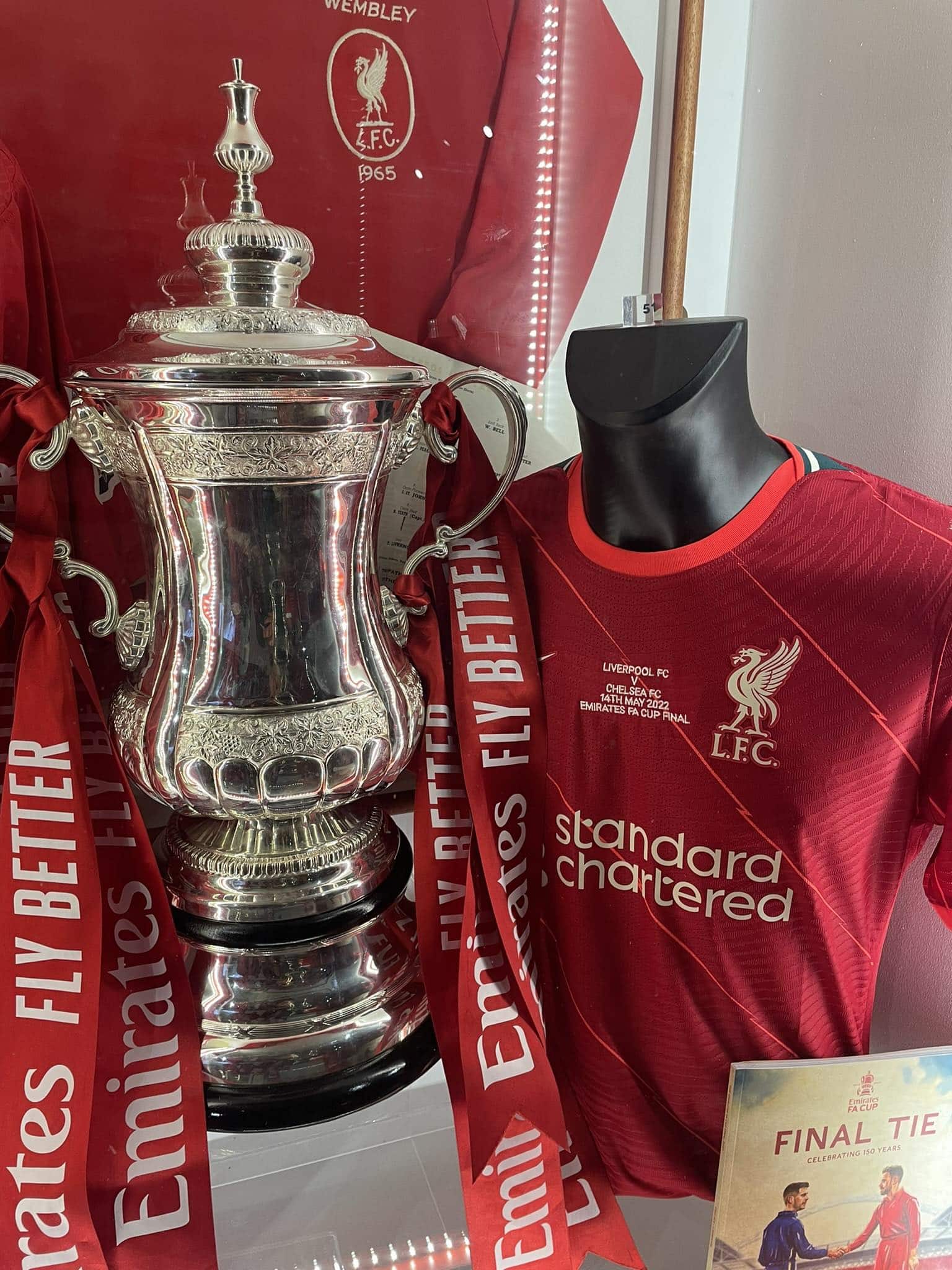
The crest grew most in the 1990s, when the Shankly Gates and the two eternal flames for the Hillsborough victims were added.
Today it runs on red and white: #D71921 #FFFFFF. For RGB, CMYK and Pantone, see the current Liverpool color codes.
Liverpool F.C. logo history timeline
Liverpool F.C. logo 1892-1950

The Liver Bird symbol first flew on a flag over Anfield in 1892, but for decades the club used the full Liverpool city coat of arms (Neptune and Triton flanking two liver birds, with a Latin motto) on correspondence and programmes rather than a dedicated kit crest.
Liverpool F.C. logo 1950-1955
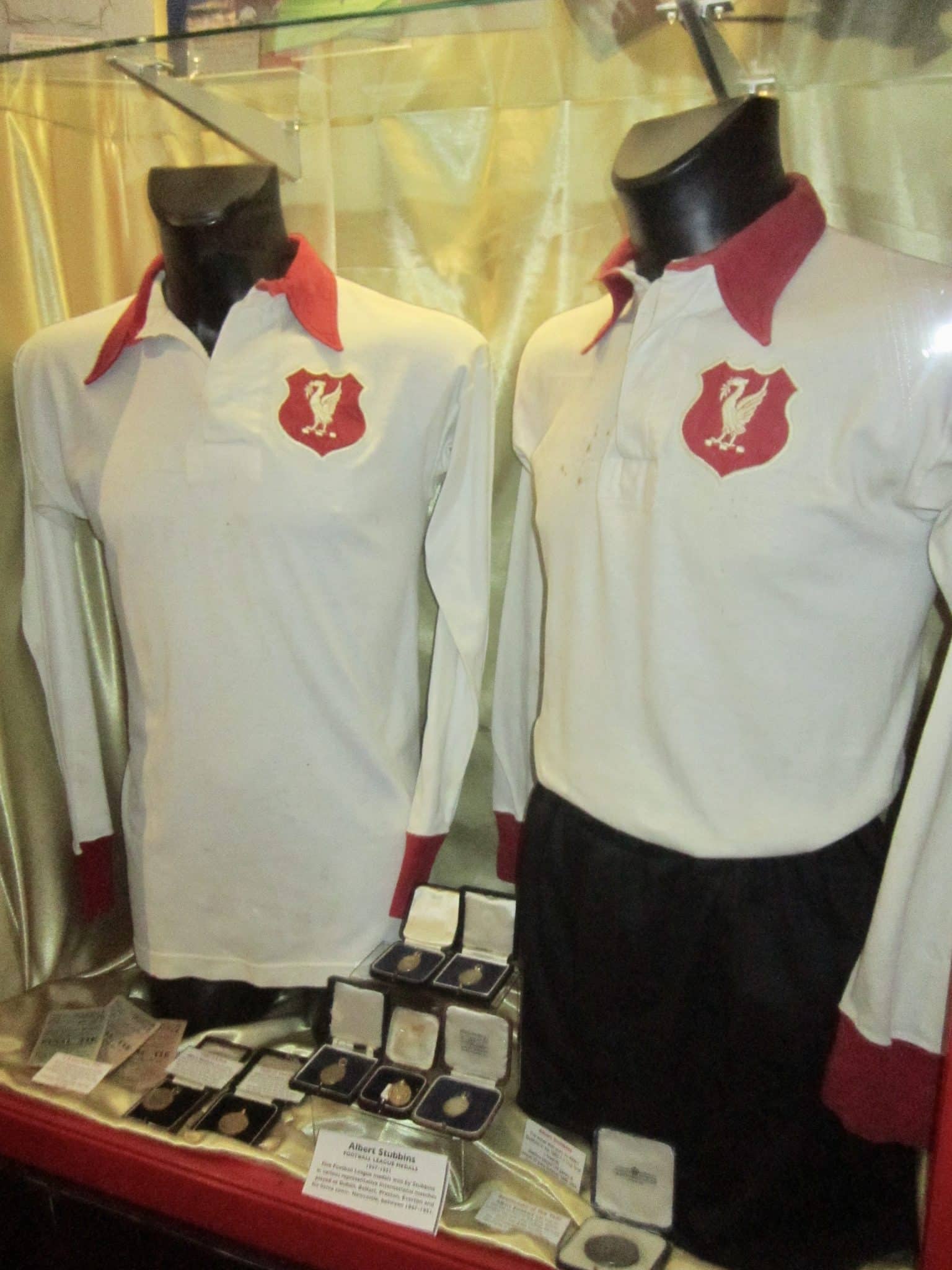
A simplified single liver bird first appeared directly on the playing kit, debuting on the white away shirt at the 1950 FA Cup Final.
Liverpool F.C. logo 1955-1968
The liver bird was placed inside a vertically-oriented oval badge, with 'L.F.C.' lettering added beneath it for the first time on the home shirt.
Why it changed: First explicit lettering of the club's initials on the crest.
Liverpool F.C. logo 1968-1987
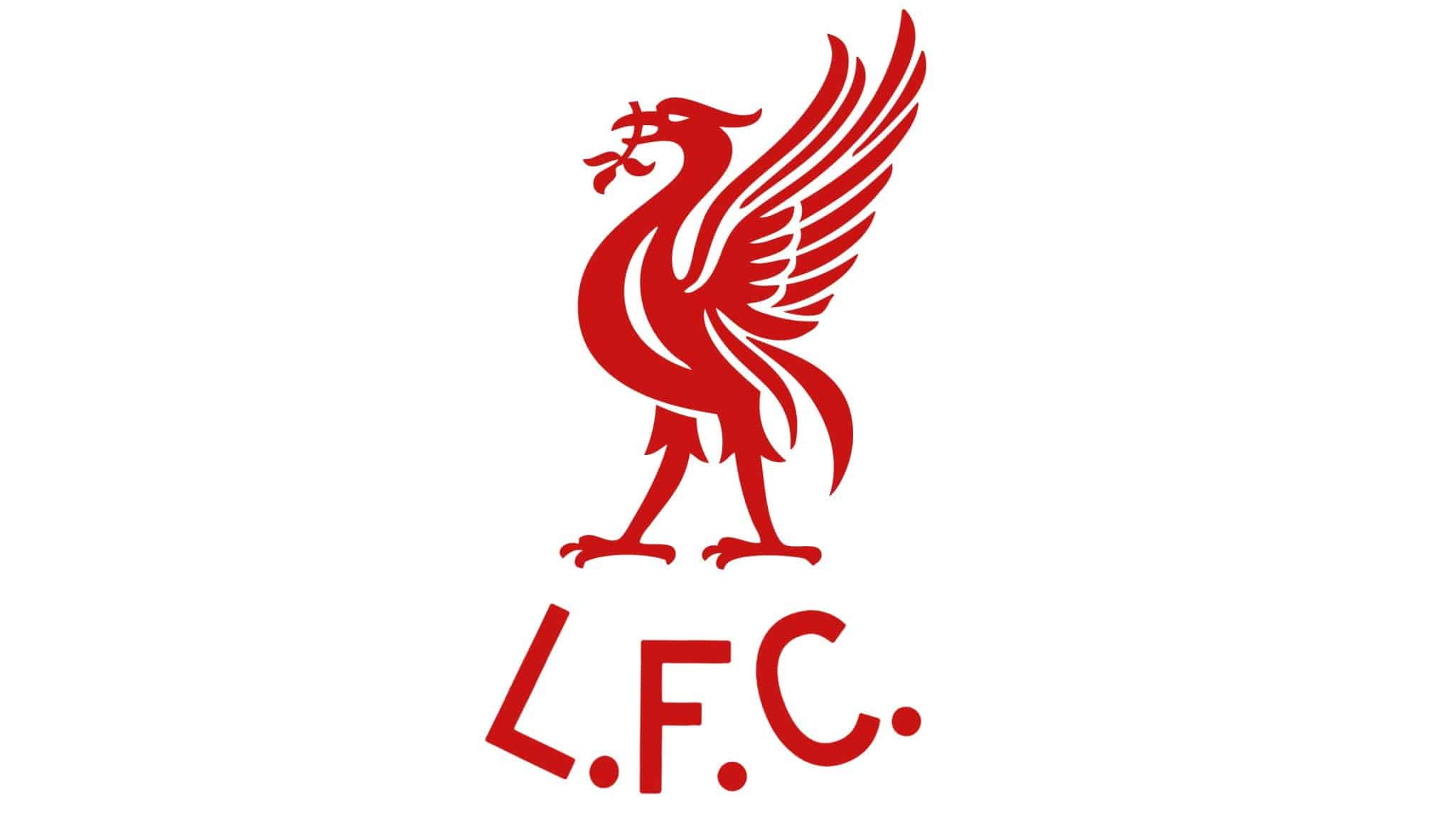
The oval frame was dropped, leaving just the liver bird and 'L.F.C.' initials in a minimalist design, coinciding with Bill Shankly's switch to an all-red kit.
Why it changed: Simplification alongside the club's move to an all-red kit.
Liverpool F.C. logo 1987-1992
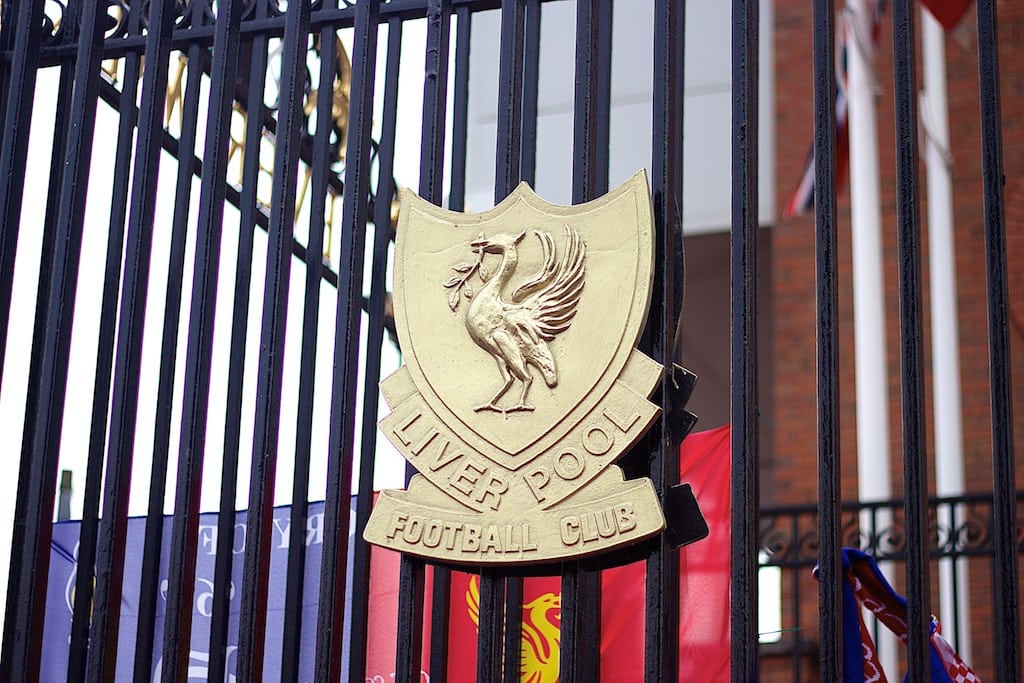
A shield-shaped crest was reintroduced along with 'Liverpool Football Club' text/banner appearing on shirts for the first time, returning to a more heraldic design ahead of the club's centenary.
Liverpool F.C. logo 1992-1993
A centenary badge placed a larger shield behind the existing one and added the Shankly Gates (Anfield's ceremonial gates memorializing manager Bill Shankly) at the top, plus '1892-1992' text and, for the first time, the 'You'll Never Walk Alone' lyrics.
Why it changed: Club's 100th anniversary, coinciding with the inaugural Premier League season.
Liverpool F.C. logo 1993-1999
Two stylized 'eternal flame' torches were added on either side of the shield as a permanent memorial to the fans who died in the 1989 Hillsborough disaster; the badge lines were also thinned and the '100 years' text dropped. Sources disagree on whether the flames were added in 1992 (as part of the centenary badge) or specifically in 1993 in a refined follow-up version.
Why it changed: Memorial to the 96 (later recognized as 97) supporters who died in the 1989 Hillsborough disaster.
Liverpool F.C. logo 1999-2012
Yellow badge elements were switched to green and gradient shading was added for a more three-dimensional look, with the liver bird given white highlights; this version continued to be used in an official/non-kit capacity even after later kit-only simplifications.
Liverpool F.C. logo 2012-2024
The shield and Shankly Gates were removed from the shirt badge, returning to a minimalist 1968-style liver bird and 'L.F.C.' design; the Hillsborough memorial (the number '96', later changed to '97' after the death of a 97th victim in the 2022-23 season) was relocated to the back shirt collar. The fuller 1992-style shield crest with Shankly Gates continued in parallel as the official crest on the stadium and non-kit branding.
Why it changed: Kit manufacturer/marketing-driven simplification for shirts (Warrior Sports kit deal from 2012).
Liverpool F.C. logo 2024-present

The 1992-derived full crest (shield, Shankly Gates, 'You'll Never Walk Alone' text) was retired from all official branding, websites, apps, social media, and kits, in favor of the simplified liver-bird-only badge with 'LFC' initials beneath it.
Why it changed: The club cited that over 86% of liverpoolfc.com visitors and 98% of social-media users access content via mobile devices, wanting a badge that reads clearly at small digital sizes; the original 1992-style crest was retained unchanged on Anfield stadium and training-ground signage, and the Hillsborough memorial was explicitly preserved on the shirt collar, though the change drew public backlash over perceived loss of heritage symbolism.
Liverpool F.C. logo colors by era
| Era | Colors |
|---|---|
| 1892-1950 | Red #C61A19*White #FFFFFF |
| 1950-1955 | Red #4E261F*White #FFFFFF |
| 1955-1968 | Red #842B2E*White #FFFFFF |
| 1968-1987 | Red #CA1413*White #FFFFFF |
| 1987-1992 | Red #734C45*White #FFFFFF |
| 1992-1993 | Red #E02D36*White #FFFFFFGreen #1BA389* |
| 1993-1999 | Red #CE242D*White #FFFFFFGold #EAC64C*Green #8A7847*Black #000000 |
| 1999-2012 | Red #855456*White #FFFFFFGreen #4D7168* |
| 2012-2024 | Red #842B2E*White #FFFFFF |
| 2024-present | Red #D71921*White #FFFFFF |
Things worth knowing
- The Shankly Gates were added to Liverpool's crest in 1992 as part of the club's centenary badge.
- The gates carry the inscription "You'll Never Walk Alone", which is why a song ended up inside the crest at all. Few clubs have an anthem that famous, and smaller sides that want one now tend to have a club anthem written for them.
- Eternal-flame torches memorializing the 96 (later 97) fans who died in the 1989 Hillsborough disaster were added to the crest, though sources disagree on whether this happened in 1992 or 1993.
- In 2012, the shield and Shankly Gates were removed from the shirt badge (reverting to a 1968-style minimalist liver bird), while the Hillsborough memorial number was moved to the back shirt collar.
- In 2024 the club retired the detailed 1992-style crest from all official branding in favor of a simplified liver-bird badge, citing mobile/social-media legibility; the older crest remains physically in place at Anfield and the training ground, and the Hillsborough memorial was kept on the shirt collar despite public criticism of the change.
- Liverpool was granted a formal heraldic badge in 1977 (a red liver bird standing on a football) but never actually used it on the club crest.
Values marked * were measured from the logo artwork of that period. Brand color standards did not exist for most of these eras, so no official hex value was ever published for them. Treat them as an accurate reading of the artwork rather than as an official brand value. Unmarked values are the club’s own published colors.
Sources
- https://en.wikipedia.org/wiki/Liverpool_F.C.
- https://en.wikipedia.org/wiki/Liver_bird
- https://sportslogohistory.com/the-history-of-the-liver-bird-liverpool-fc/
- https://legacy.liverpoolfc.com/news/125/261454-in-pictures-a-short-history-of-the-liverpool-fc-crest
- https://commons.wikimedia.org/wiki/Category:Logos_of_Liverpool_FC
- https://commons.wikimedia.org/wiki/File:Logo_Liverpool_FC_(2024).png
- https://commons.wikimedia.org/wiki/File:Liverpool_Crest.jpg
- https://www.givemesport.com/why-liverpool-badge-changed/


